

In our previous post on the five-part progression, we described the Outside-In framework: foundations, combinations, breakthroughs, applications and integration. Learning domains offer another way to consider the abilities students develop within that progression.
But while those phases help map the course’s timeline, another layer really shapes the experience: learning domains. This is where you get to decide just how deep you want to go.
If you want to skip ahead to figuring out why you should choose one, two or three learning domains, click here.
Why Learning Domains Matter
Breaking a course into separate learning domains helps you see the multiple perspectives often found within a course. Without showing these perspectives, the course structure and organization of each lesson isn’t always clear.
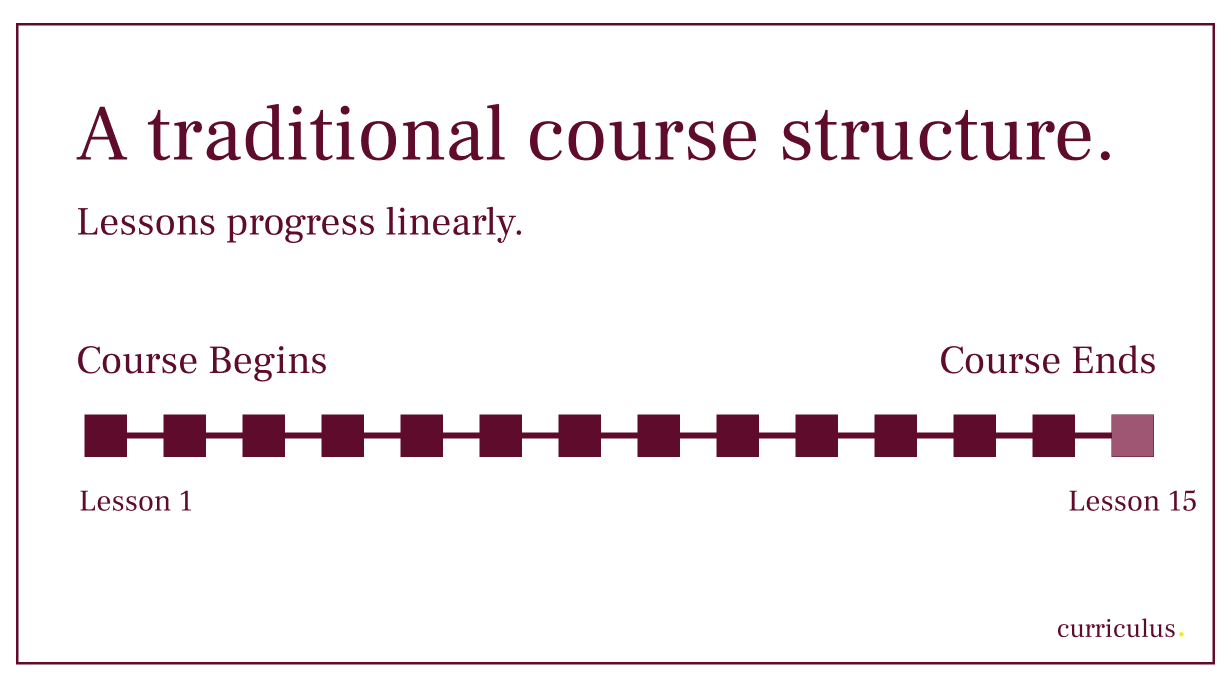
Learning Domains - aka “themes of the course.”
Think of a learning domain as a way to bundle related skills together, almost like putting them in a mental container. Rather than asking learners to juggle a dozen separate skills, we group them into a few big themes that are easier to track and understand. Most well-designed courses already have natural themes running through them. An instructor teaching research methods might emphasize both quantitative and qualitative approaches. A leadership course might develop both strategic thinking and interpersonal influence. These themes exist whether or not they're made explicit.
With Curriculus, we discuss the areas of learning and the abilities you want students to develop before planning the lessons. You confirm that direction and review the emphasis across the course.
If you already have domains woven naturally through your course, we can make them visible. Students and instructors can see which lessons develop which areas of capability, and whether the balance matches your intentions.
If you want to take an existing course deeper in specific areas, we help identify where those areas are and what "deeper" looks like structurally. Going deeper into a domain means more foundational skills, more practice with combinations, and more application contexts. For instance, in a business leadership course, going deeper in the domain of strategic thinking might involve additional foundational skills such as scenario planning and risk management. It could include combination practice, like integrating financial analysis with marketing strategies to make informed decisions.
If you're developing a new course or substantially reworking an existing one, we identify the natural themes needed to achieve your intended outcomes, build progression within each theme, and then build the entire course from there.
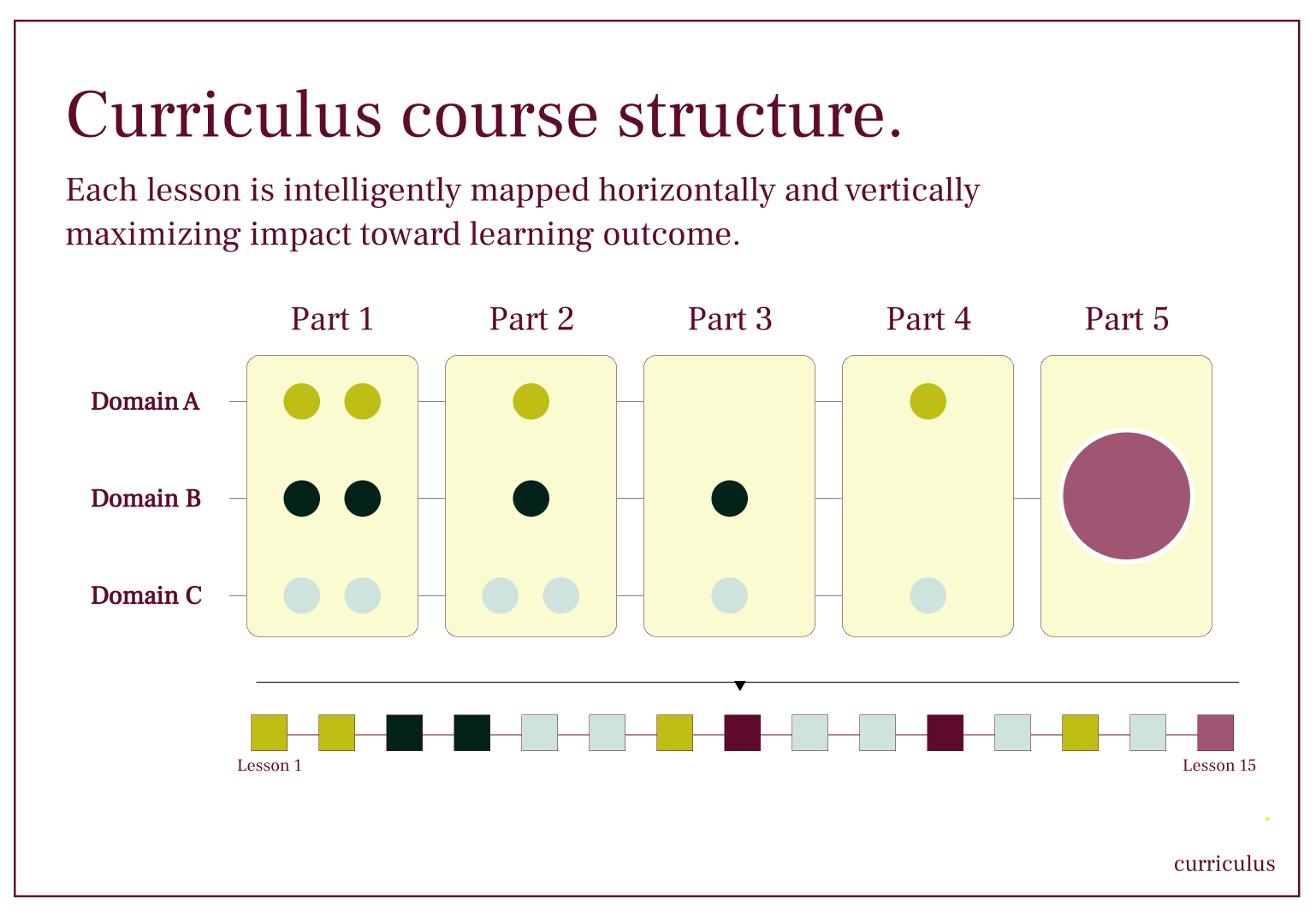
What Domains Make Visible
When you organize a course by domains, you start to see patterns that a week-by-week schedule can easily hide.
- Balance is easy to spot. If your course has two domains but most lessons focus on one, you’ll notice it immediately. This could be intentional, or it might mean some skills need more attention.
- You can also review the intended progression within each domain. You can quickly check that the basics come before the more complex stuff—no more guessing if you’ve put the cart before the horse.
- Integration needs jump out, too. When you’re working with several domains, it becomes clear when and how students should start connecting the dots—making sure they have enough time to actually bring those perspectives together.
- Deciding how to teach each domain becomes easier. Some domains need theory before practice, while others work best with hands-on learning right away. When you know which lessons fit each domain, you can check if your teaching style matches what’s needed.
What This Means in Practice
For example, consider developing a course to build culturally responsive practice in social work. To succeed, students need to understand cultural contexts, use specific intervention techniques, and keep assessing how effective they are. Without a clear view of the course’s themes, lessons on these skills might just follow the order of topics or readings, and the link between building cultural understanding and using intervention techniques could be hard to see.
With explicit domains, the course might be organized around "Cultural Context Assessment" and "Intervention Application." Each domain has its own foundational skills, its own combinations, its own breakthrough moment. Part 5 of the course then integrates across domains: applying interventions in ways that reflect cultural assessment findings.
This kind of structure makes it so much easier for both teachers and students to see how all the pieces fit together.
Domains Work Across Course Lengths
Learning domains scale to fit different contexts.
A three-day workshop might focus on just one domain, building a specific skill in a short burst.
A semester-long course might weave together two or three domains, letting them develop side by side before bringing everything together at the end.
The main thing to watch out for is cognitive overload, which is why we never recommend more than three domains. Any more than that, and things start to get messy fast.
Keeping the course connections in view
Good domain-based design is hard to manage manually because the number of relationships grows rapidly.
A course with two domains, each containing two foundational skills, requires tracking:
- Four foundational skills and their prerequisites
- Multiple combinations within each domain
- Cross-domain combinations
- Two separate breakthrough moments
- Integration requirements in the final phase
- Assessment alignment with all of the above
Experienced instructors often keep track of these relationships in their heads, but making sure nothing is missed takes a lot of mental work. This gets even harder when you update readings, add new skills, or change a section.
With Curriculus, you confirm the learning areas, intended abilities and course sequence. We develop the course plan and lesson drafts from that direction and your readings. You review the progression and identify the changes you want.
About Curriculus
Curriculus develops course plans and detailed lesson guides with instructors. We connect your readings to explanations, discussion and practice, then revise the drafts with your feedback. See how we work together.
In our next post, Choosing the Best Domain Structure, we’ll show you how to decide between one, two, or three domains, and what each choice means for your learners.